One of the most frequently asked questions at dermatology clinics in Gangnam these days is, “What is the difference between HILO WAVE® and dermal fillers?” People in their late 30s to 50s, whose cheekbones become more prominent as the sides of the cheeks lose volume, ask this question particularly often. Recently, as more people find dermal fillers burdensome, such questions have increased even further.
HILO WAVE® Reviews: Efficacy, Side Effects, and Differences from Dermal Fillers
Heal House answers questions about the difference between HILO WAVE® and dermal fillers. We explain the treatment principle that combines immediate volume with long-term collagen regeneration, bridging dermal fillers and Skin Boosters, and why it is considered for those concerned about hollow cheeks.
To give you the conclusion first, HILO WAVE® is a different kind of treatment from dermal fillers. It can be seen as a hybrid of dermal fillers and Skin Boosters, as it induces both immediate volume and long-term collagen regeneration at once.
I recently tried HILO WAVE® myself, and I have organized the information that many people are most curious about, including an honest review, the effects, the differences from dermal fillers, and even who it is recommended for.
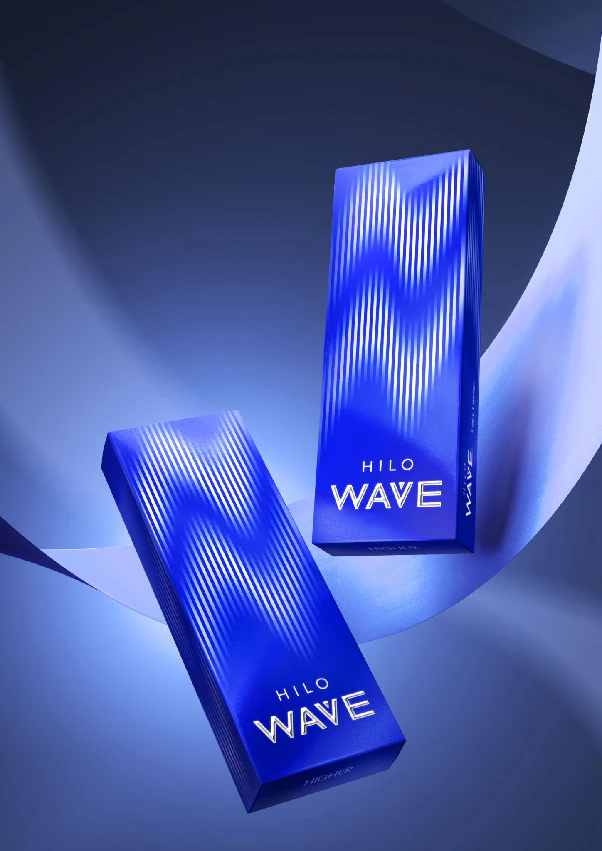
I tried it myself before recommending it. What is HILO WAVE®?
HILO WAVE® is a bio-stimulator based on dual hyaluronic acid developed in France. It is neither a dermal filler that simply fills, nor a typical Skin Booster that only supplies moisture to the surface, but rather a combination filling treatment that sits in between.

It combines high-molecular-weight hyaluronic acid, which creates a soft volume and hydration immediately after the procedure, with low-molecular-weight hyaluronic acid, which penetrates deep into the dermis and stimulates collagen and elastin production, so immediate filling and long-term skin regeneration are both included in a single treatment.
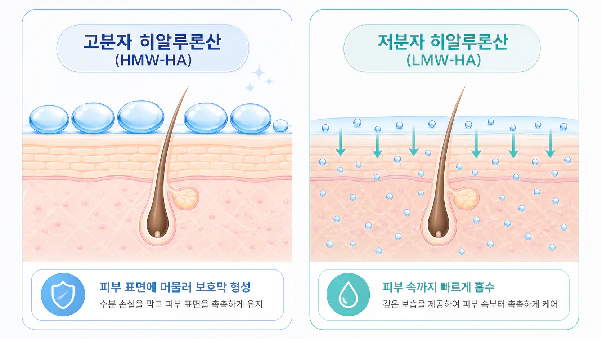
It has received Class 4 medical device approval from the Ministry of Food and Drug Safety, so the evidence for its safety is clear. It has been about a month since I had the treatment, and when I look in the mirror, I feel that the three-dimensionality has returned and my previously flat impression has revived. It is a subtle difference, though.
What is the difference between HILO WAVE® and dermal fillers?
Many people ask, “Isn’t it just a dermal filler?” but the two treatments differ greatly even in their physical properties.
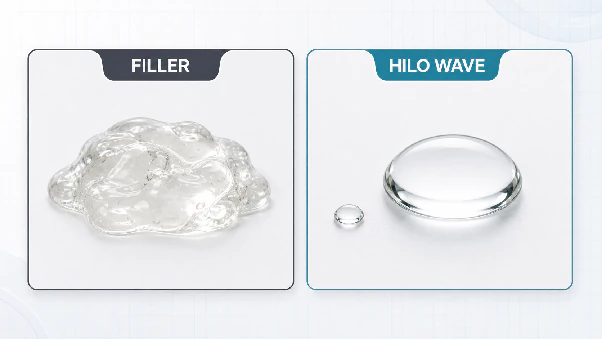
Dermal fillers are treatments that use crosslinkers to form a firm, cohesive shape. Therefore, they are suitable for areas that need structure, such as the forehead, nose, and chin. In contrast, HILO WAVE® has a soft consistency with minimal crosslinkers, so it spreads evenly without clumping in one spot. For this reason, it is suitable for areas that need to be filled naturally, such as the sides of the cheeks, the front of the cheeks, and under the eyes. Because of these differences, HILO WAVE® has three notable advantages.

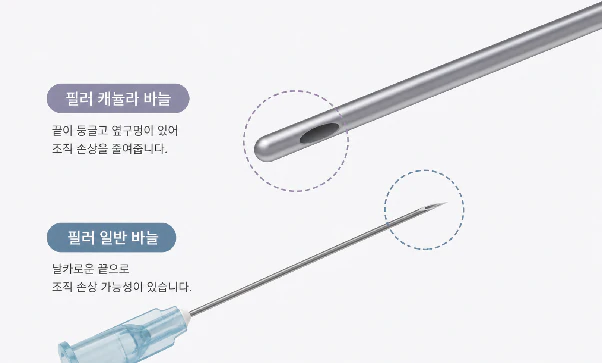
First, the risk of nodules is low because it spreads evenly rather than clumping in one place. Second, it can be dissolved. In the unlikely event that you are not satisfied with the results, it can be dissolved with hyaluronidase. Third, there is almost no downtime. Because a cannula is used to fill a large area through just one or two small entry points, you can return to your daily routine the same day without any lumps or marks.
Who is it recommended for? Who are the candidates for HILO WAVE®?
In my practice, I primarily recommend HILO WAVE® to patients in the following three categories.
- Patients in their late 30s with a peanut-shaped face
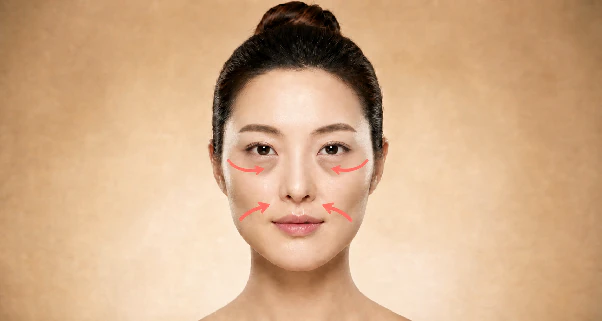
For a peanut-shaped face where the sides and front of the cheeks appear sunken beside the cheekbones, using a cannula to inject dual HA into the hollowed sides and front of the cheeks restores a natural three-dimensionality and rebalances the face.

- Patients in their early 40s with under-eye and nasolabial fold concerns
These are patients with subtle volume loss under the eyes and in the upper part of the nasolabial folds. For such patients, I perform the procedure with a cannula on areas that need fine volume correction. The effect is that, unlike dermal fillers, it does not look filled or obvious, but rather gives a more refined impression without looking treated.
- Patients who found dermal fillers burdensome after trying them
For those who have experienced discomfort from nodules or lumps after previous dermal filler treatments, switching to HILO WAVE®, which has minimal crosslinkers, is a good option. This way, you can experience a natural fullness without worrying about nodules.
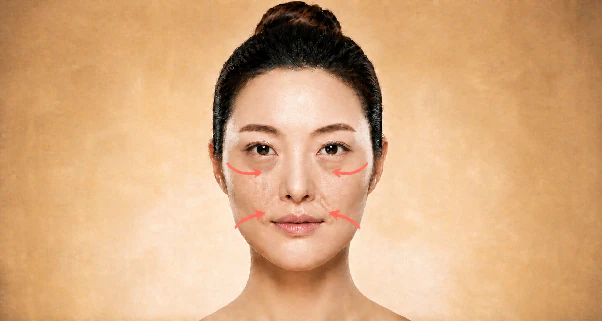
Conversely, for areas that require distinct shaping, such as the forehead or nose, or when the volume loss is very severe, dermal fillers or fat grafting may be more suitable than HILO WAVE®.
When does the effect of HILO WAVE® appear, and how long does it last?
I myself did not see much change immediately after the procedure. In fact, there was slight swelling. Then, starting around the 2-week mark, my facial expression softened and the cheeks began to fill out.
Immediately after the procedure, a soft volume is formed.
At 2 to 3 weeks, along with collagen production, the real changes begin to appear naturally.
The average duration is 4 to 6 months.
The recommended treatment interval is once every 3 to 6 months, and with repeated treatments, the results tend to last longer.
I also plan to receive it again next time. Because from the standpoint of someone who recommends it to patients, there is a clear difference between having received the procedure once and having received it twice.
What about HILO WAVE® side effects and downtime?
The most commonly mentioned side effects of filler procedures can be grouped into five main categories. How does HILO WAVE®, known for having fewer side effects, compare? Since I have received the treatment myself, I will give you an honest assessment.
Nodules: Thanks to its soft properties with minimized cross-linking agents, the risk is relatively low.
Bruising and embossing marks: Because it uses a cannula technique, they hardly remain.
Swelling: There may be slight swelling immediately after the procedure, but it subsides within 1–2 days.
Delayed inflammatory reaction: This product is designed to minimize this compared to regular dermal fillers.
Management when satisfaction is insufficient: Since it is hyaluronic acid-based, dissolution is possible.
There is no need to be scared, but it is not a procedure to take lightly either. Ultimately, side effects depend on the practitioner's skill with the cannula and the accuracy of the pre-procedure assessment. Cannula procedures are very safe in experienced hands, but in less experienced hands the texture of the filling can vary, so it is advisable to visit a clinic with a skilled specialist.
What criteria should you consider when choosing a dermatology clinic in Gangnam?
Although HILO WAVE® is considered safe, it is still a procedure, so it is wise to research the clinic carefully before visiting. The criteria for choosing a clinic to receive the treatment safely and effectively can be summarized into four main points.

Look for a clinic that performs facial analysis first Even with the same procedure, the impression can change completely depending on where and how the filling is placed. Be cautious of clinics that decide the treatment area first and then recommend it.
Check that the doctor has sufficient experience with cannula procedures The advantages of HILO WAVE®—filling without nodules and minimal downtime—are both determined by the doctor's skill with the cannula.
See whether the clinic distinguishes between dermal fillers and HILO WAVE® when recommending The two procedures have different indications. It is better to choose a clinic that suggests the appropriate procedure for each area rather than one that tries to solve all filling needs with a single treatment.
Check whether the aftercare instructions are clear A clinic that provides clear guidance on post-procedure swelling, care, and the timing of the next session is recommended.
A Filling Just a Hair's Breadth
Many people think of dermatology procedures as purely cosmetic, but I believe another meaning these treatments can have is to gently ease the years a person has endured, even if only a little. Not a huge change, but quietly giving breath to a place that has become stiff. I think I approached HILO WAVE® with that mindset.

Quick Q&A
Q. What is HILO WAVE®? It is a bio-stimulator based on dual hyaluronic acid developed in France. High-molecular-weight and low-molecular-weight hyaluronic acid work together to induce both immediate volume and long-term collagen and elastin production at the same time, and it has received Class 4 medical device approval from the Ministry of Food and Drug Safety.
Q. What is the difference between HILO WAVE® and dermal filler? The biggest difference is in the material properties. While dermal filler uses cross-linking agents to form a firm, shaped mass, HILO WAVE® has a soft consistency with minimal cross-linking agents, spreading evenly without clumping in one spot. The key differences are the lower risk of nodules and the ability to dissolve it with hyaluronidase if the result is not satisfactory.
Q. How is HILO WAVE® different from JUVELOOK and REJURAN®? JUVELOOK shows gradual improvement after 3 sessions, whereas HILO WAVE® offers immediate results. REJURAN® is injected directly with a needle, which can cause bumps, but HILO WAVE® uses a cannula method, allowing you to return the same day without marks.
Q. Which face shapes are well suited for HILO WAVE®? It is particularly well suited for peanut-shaped faces where the sides and front of the cheeks near the cheekbones appear sunken. It is also suitable for areas requiring subtle volume correction, such as under the eyes and the upper part of the nasolabial folds.
Q. When does the effect of HILO WAVE® appear and how long does it last? A soft sense of volume is created immediately after the procedure, and the real change naturally appears over about 2–3 weeks along with collagen production. The average duration is 4–6 months, and with repeated sessions, the effects tend to last longer.
Q. What about side effects and downtime for HILO WAVE®? Because of its soft properties with minimized cross-linking agents, the risk of nodules is low, and thanks to the cannula technique, bruising and embossing marks are almost nonexistent. A return to daily activities is possible on the day of the procedure.
Q. What is the price of HILO WAVE®? The cost varies depending on the treatment area and the amount used, so the exact price will be provided during a 1:1 consultation.
#HILO WAVE #HILO WAVE review #HILO WAVE price #HILO WAVE side effects #HILO WAVE dermal filler difference #dual hyaluronic acid #bio-stimulator #Skin Booster #peanut-shaped face #lateral cheek volume #hollow under eyes #nasolabial folds #natural filling #Gangnam dermatology clinic #Heal House #Dr. Hanmi Jung
Was this article helpful?