Dr. Jung Min Bae Attends East Asia Vitiligo Symposium in Guangzhou, China
Invited as session chair and speaker at the 5th EAVA 2026, sharing the development background and clinical application of vitiligo assessment methods and VAS-19.
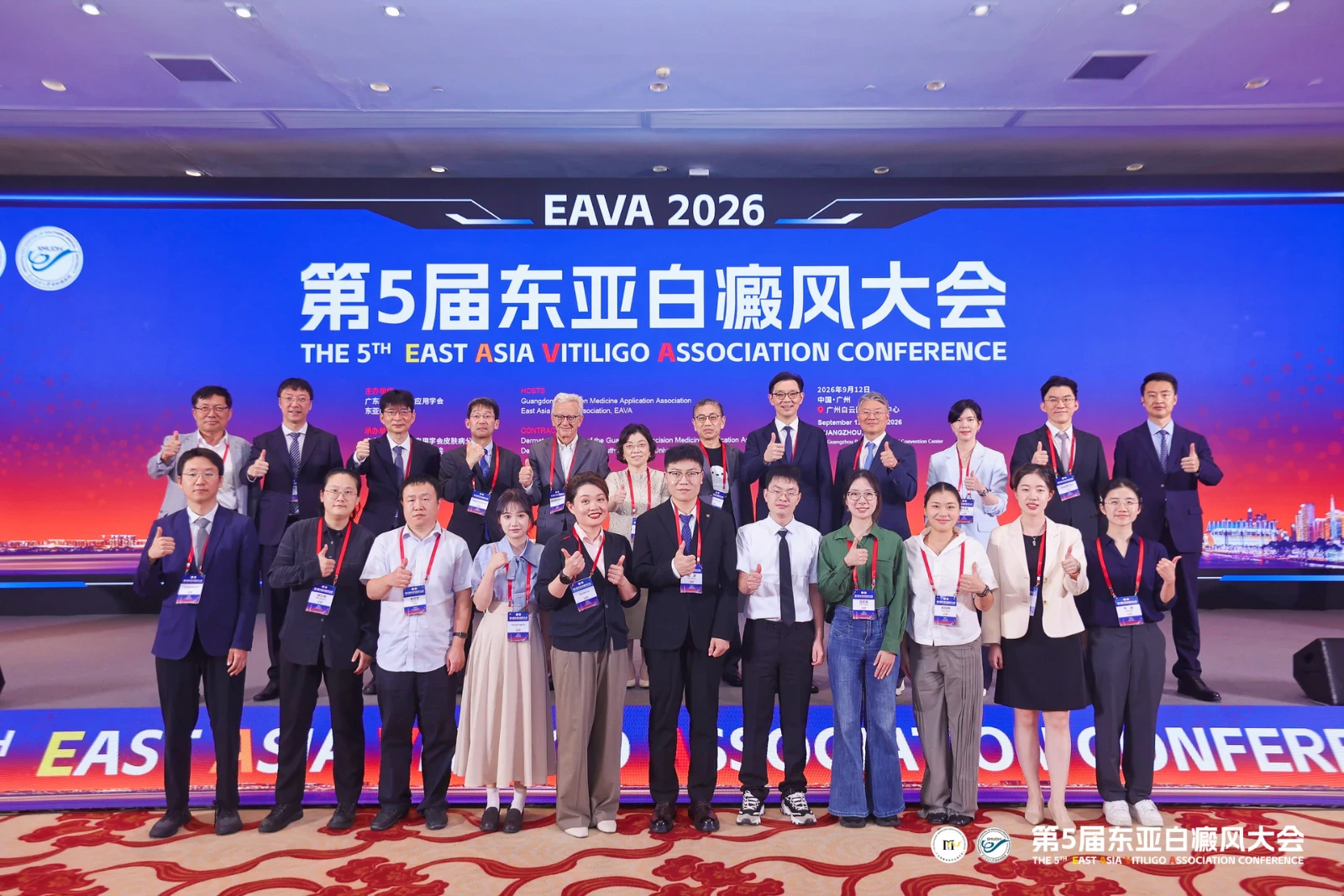
Director Jung Min Bae attended the 5th East Asia Vitiligo Association (EAVA 2026) held at the Guangzhou Baiyun International Convention Center in Guangzhou, China, as an invited speaker and session chair. At this conference, vitiligo experts from Korea, Japan, Taiwan, and China gathered to share the latest findings in East Asian vitiligo research and diverse clinical experiences, fostering active academic exchange. The East Asia Vitiligo Association is an academic conference first held in Seoul, South Korea in 2016, and has been held every two years, rotating among Korea, Japan, Taiwan, and China. This year's 5th conference also featured various lectures and discussions led by local researchers including Professor Leihong Flora Xiang of Huashan Hospital, Fudan University.
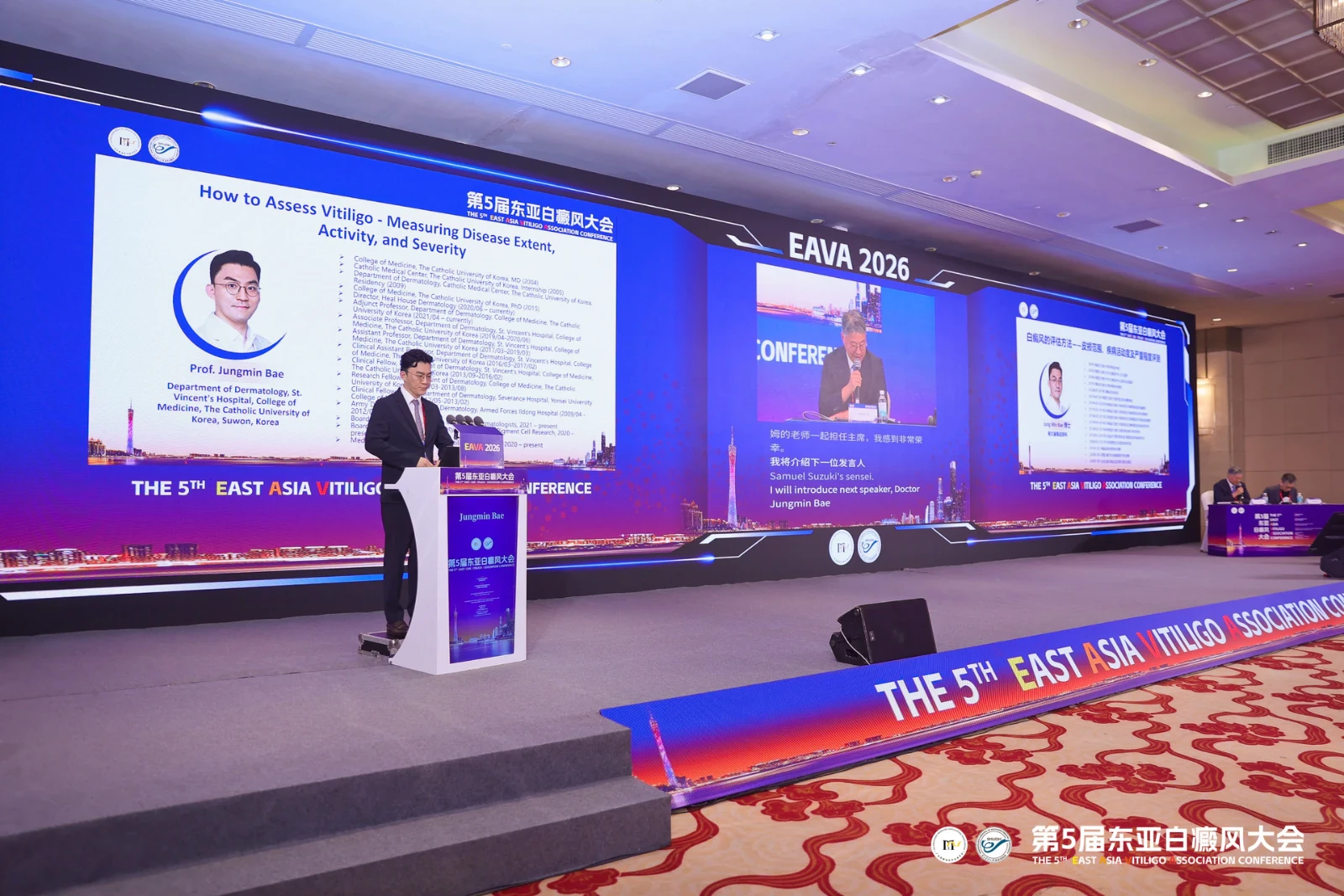
Leading academic discussions as invited speaker and chair. Director Jung Min Bae co-chaired the EAVA Invited Speech session with Professor Ken Okamura of Yamagata University in Japan, leading the lectures and academic discussions. He then gave a lecture as an invited speaker on the topic "How to Assess Vitiligo - Measuring Disease Extent, Activity, and Severity." In this lecture, he reviewed the characteristics and applications of major assessment tools used for evaluating vitiligo, such as VASI, VES, and VSAS, and also introduced the development background and clinical application of VAS-19 (Vitiligo Assessment Sheet 19), which was developed for more consistent and efficient assessment.
In particular, vitiligo is a disease where it is important not only to check the size of the lesions, but also to accurately assess whether the disease is currently progressing and the extent and severity of involvement, as this determines the direction of treatment. Therefore, establishing objective and consistent assessment criteria is meaningful not only for confirming changes before and after treatment, but also for establishing a more appropriate treatment plan for patients. Vitiligo is a disease where visible changes serve as the basis for treatment decisions. The direction and timing of treatment can be determined only when the extent of the lesions and whether they are spreading can be read using consistent criteria. Heal House will continue its international academic activities so that the clinical experience accumulated through learning and sharing with vitiligo experts around the world can reach more patients.
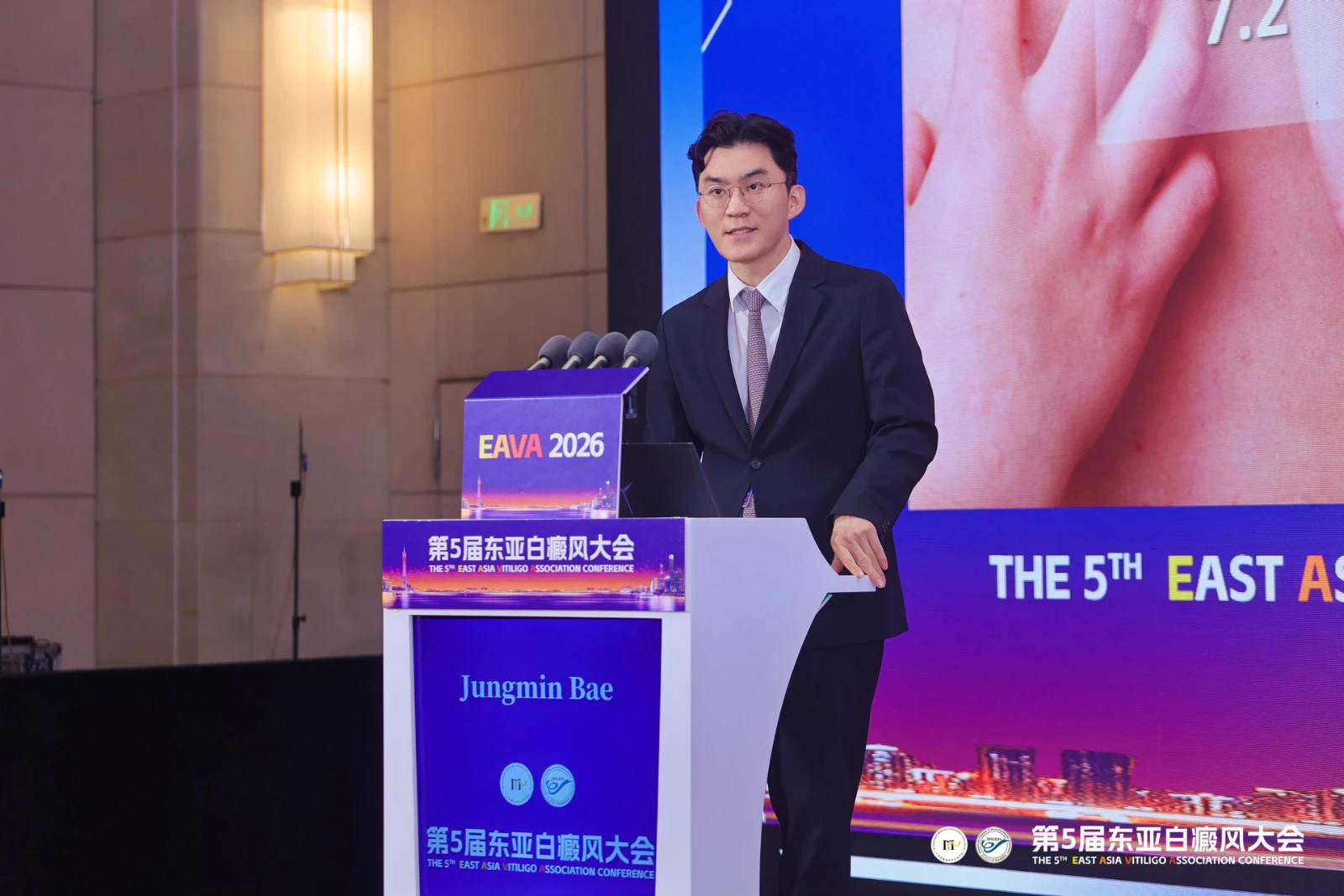
Academic exchange that began in Seoul leads to Asian vitiligo research. Concluding his lecture, Director Jung Min Bae emphasized that the East Asia Vitiligo Association, which began in Seoul in 2016, has become a venue for academic exchange where researchers from various countries continuously interact and share experiences, jointly advancing vitiligo research in Asia. He also expressed his intention to continue sharing research and clinical experiences with vitiligo experts both domestically and internationally, and to strive so that such academic exchange leads to more precise and effective treatment for patients in actual clinical settings. Vitiligo is a disease where visible changes in the skin serve as an important criterion for treatment decisions.
The direction of treatment can be established starting from accurately and consistently examining how extensive the lesions are and whether they are currently progressing. Heal House will continue its academic exchange and research activities with vitiligo experts both domestically and internationally. We will continue to think about ways to understand vitiligo more deeply and treat it accurately, so that the knowledge and clinical experience learned and shared with researchers from around the world can lead to better treatment in clinical settings.
Was this article helpful?